Use Code: GIFT - Save 10%

Does Aluminum Foil Block EMF? The Truth About DIY EMF Shielding
If you’ve searched for ways to reduce EMF exposure, you’ve probably come across the suggestion to wrap devices or walls in aluminum foil. While aluminum foil can block certain radio frequency (RF) signals under specific conditions, it isn’t a practical or complete EMF shielding solution for most everyday applications. Understanding how shielding works can help you make informed decisions about protecting your home and family.
How Does Aluminum Foil Block EMF?
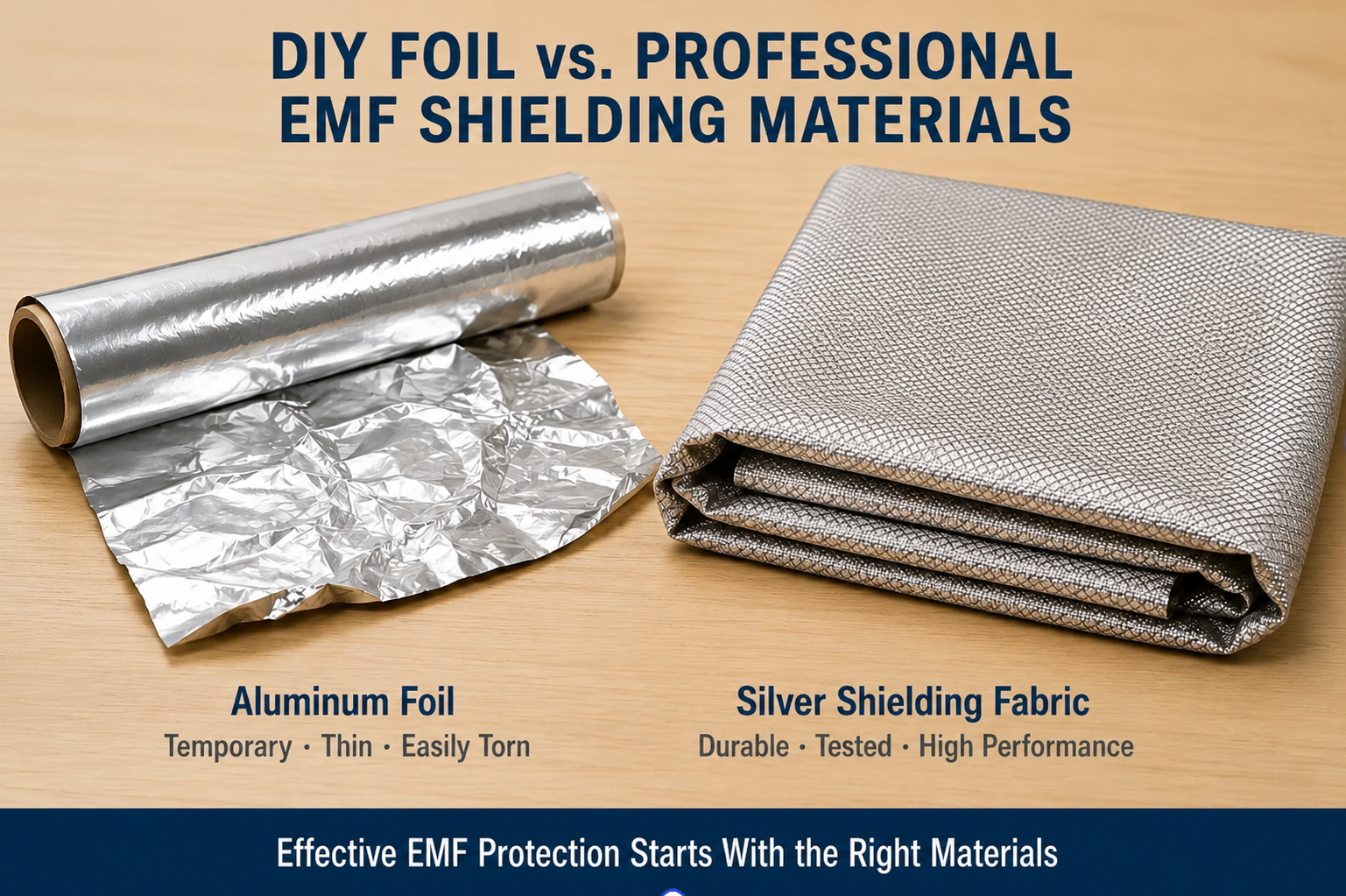
Aluminum is a conductive metal, which means it can reflect and absorb some radio frequency (RF) electromagnetic waves. This is why aluminum is commonly used in electronics, aerospace applications, and certain shielding products.
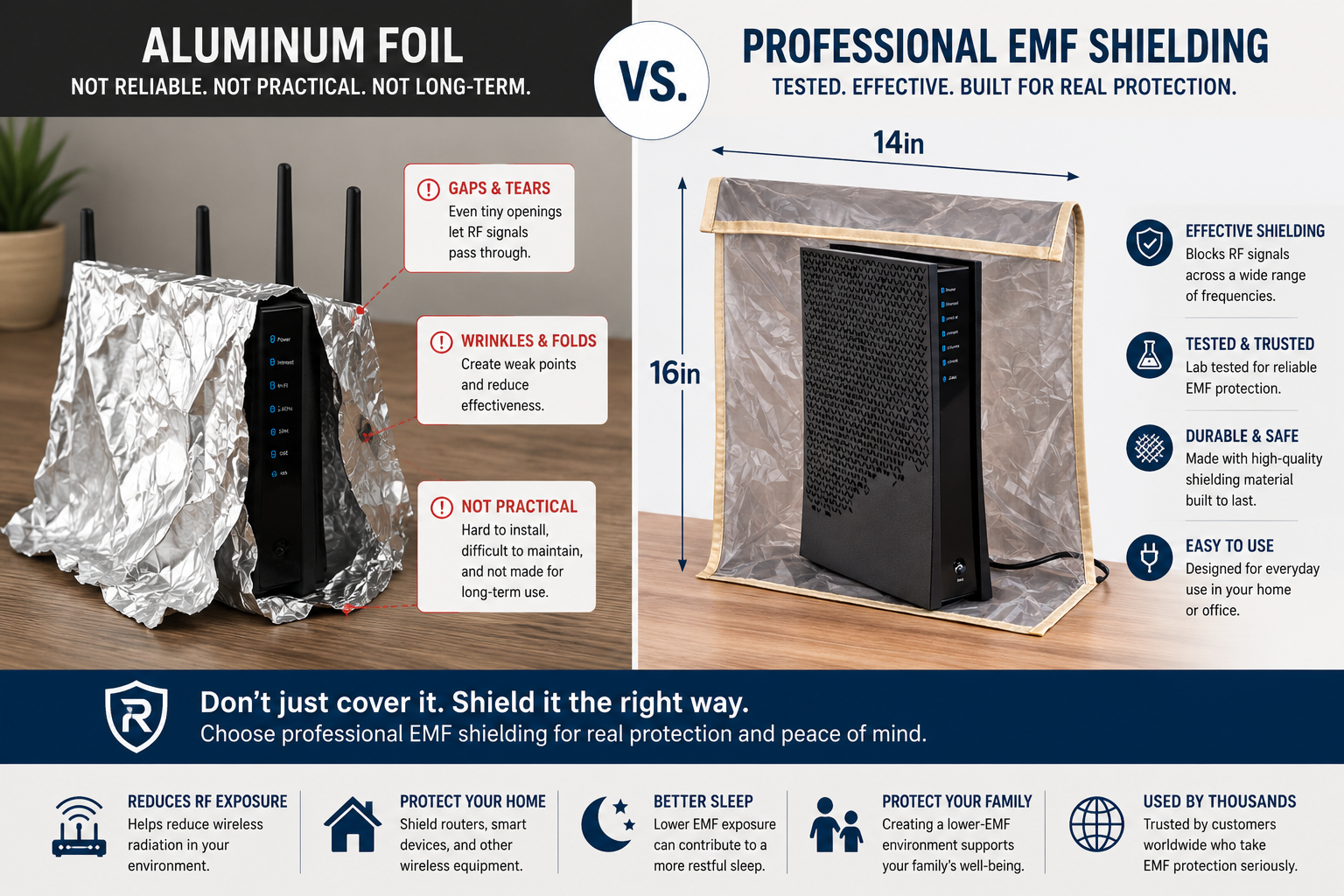
However, simply placing aluminum foil over an object rarely creates an effective shield. Small gaps, seams, folds, and openings allow RF energy to enter, significantly reducing its effectiveness. In many cases, improperly applied foil provides only limited shielding and is not practical for long-term use.
It’s also important to understand that aluminum foil does not block every type of electromagnetic field. Extremely low frequency (ELF) magnetic fields generated by household wiring, electrical panels, and many appliances behave differently than RF signals and generally require different mitigation strategies.
If you’re looking for a more dependable solution, Redemption Shield’s Military-Grade Faraday Fabric for EMF Protection is professionally engineered for high-performance RF shielding. Tested to provide 82–92.5 dB of shielding effectiveness up to 10 GHz, this durable fabric is designed for a wide range of applications, including shielding rooms, electronics, enclosures, and custom projects where reliable EMF protection is needed.
Can Aluminum Foil Block Wi-Fi and Cell Phone Signals?
Because Wi-Fi, Bluetooth, and cellular networks all use radio frequency (RF) signals, aluminum foil can reduce or block these signals if it forms a continuous conductive barrier around the device. However, even small gaps, tears, or openings can significantly reduce its effectiveness.
This is why professionally designed Faraday products and EMF shielding materials are engineered to provide more consistent shielding performance than ordinary household aluminum foil.
Why Professional EMF Shielding Materials Work Better
While aluminum foil can reduce certain RF signals under controlled conditions, most people are looking for a practical solution they can use every day. Wrapping routers, electronics, or parts of a room in household foil is often inconvenient, unattractive, and difficult to maintain. Professionally engineered EMF shielding products are designed to provide dependable performance while fitting naturally into a home or office environment.
Professional EMF shielding materials are specifically engineered to provide consistent, measurable protection across a broad range of radio frequencies. Rather than relying on thin household aluminum, these advanced fabrics incorporate highly conductive metals such as silver, copper, and nickel into durable woven textiles that are built for long-term performance.
One example is Redemption Shield’s Military-Grade Faraday Fabric, which combines high shielding performance with the flexibility needed for walls, electronics, enclosures, and custom EMF shielding projects. This flexible, lightweight fabric is ideal for shielding walls, electronics, enclosures, equipment, and custom projects where dependable RF protection is essential.
Unlike ordinary aluminum foil, professionally engineered shielding fabrics are designed to withstand everyday use while maintaining consistent shielding performance. They are also much easier to install for home, office, laboratory, and industrial applications.
If your goal is to create a lower-EMF sleeping environment, professionally tested EMF Bed Canopies offer another effective solution. Designed to help reduce exposure to wireless RF signals while you sleep, they provide a practical alternative to attempting to line a bedroom with aluminum foil.
Explore EMF Protection Bed Canopies:
https://redemptionshield.com/product-category/emf-bed-canopies/
Looking to Reduce Wi-Fi Router EMF?
If you’re trying to reduce RF exposure from your home’s wireless network without completely disabling your internet connection, a professionally designed WiFi Router Cover offers a more practical solution than wrapping your router in aluminum foil. Unlike household foil, it is designed for everyday use while allowing your router to continue operating normally. It’s an easy way to help reduce RF exposure without creating an unattractive DIY setup.
Explore WiFi Router Covers:
https://redemptionshield.com/product-category/wifi-router-covers/
Frequently Asked Questions About Aluminum Foil and EMF
Can aluminum foil block Wi-Fi?
Aluminum foil can reduce Wi-Fi signals if it completely surrounds the source without gaps. However, creating a continuous shield with household foil is difficult, and even small openings can allow radio frequency (RF) signals to pass through. Professionally designed shielding products are typically more effective for long-term use.
Can aluminum foil block 5G signals?
Because 5G uses radio frequencies, aluminum foil may reduce some 5G signals under ideal conditions. However, the level of protection depends on the frequency, signal strength, and whether the foil forms a complete enclosure without tears or openings.
Can aluminum foil block cell phone radiation?
Aluminum foil can interfere with a cell phone’s ability to send and receive signals if the phone is completely enclosed. In everyday use, however, wrapping a phone in aluminum foil is not a practical or reliable solution. A professionally designed Faraday Bag is specifically engineered for this purpose.
Shop Faraday Bags:
https://redemptionshield.com/product-category/faraday-bags/
What is the best material for EMF shielding?
Materials containing silver, copper, and nickel are commonly used in professionally engineered EMF shielding fabrics because of their conductive properties. Products designed specifically for RF shielding are generally more durable, flexible, and effective than household aluminum foil.
Key Takeaways
If you’re considering aluminum foil for EMF protection, keep these points in mind:
- Aluminum foil can reduce some RF signals under the right conditions.
- Small gaps, wrinkles, and tears greatly reduce its effectiveness.
- Aluminum foil is not designed for permanent EMF shielding.
- Professionally engineered shielding materials provide more consistent and measurable RF attenuation.
- The best solution depends on your specific application, whether you’re shielding a room, electronics, a Wi-Fi router, or creating a lower-EMF sleeping environment.
Gina’s Thoughts
Over the years, I’ve seen a lot of creative ideas for reducing EMF exposure, and aluminum foil is one that comes up again and again. There is some truth behind the idea, aluminum is conductive and can reduce certain RF signals, but that doesn’t mean wrapping your router, phone, or bedroom in kitchen foil is the best solution. As this article explains, gaps, seams, tears, and openings can dramatically affect shielding performance.
For me, the biggest issue is practicality. I wouldn’t want my home covered in aluminum foil, and I certainly wouldn’t consider that a long-term solution when professionally designed shielding materials are available. Good EMF protection isn’t simply about putting metal between you and a wireless signal. The material, construction, coverage, frequency range, and actual measured shielding performance all matter.
That’s one of the reasons we focus so heavily on tested shielding products at Redemption Shield®. Whether it’s shielding fabric, a bed canopy, router cover, or Faraday bag, I want our customers to understand what the product is designed to do, how it works, and where its limitations are.
My advice is simple: don’t confuse a DIY experiment with a properly designed shielding solution. Aluminum foil can demonstrate the basic principles of RF shielding, but if you’re serious about creating a lower-EMF environment, use materials and products designed specifically for the job.
Educate yourself first, measure when possible, and choose the right shielding solution for the actual source of exposure.
Gina Paeth
Founder & CEO, Redemption Shield®
Protect • Ground • Thrive.
References
Environmental Health Trust (EHT)
A nonprofit focused on scientific research and public education about wireless radiation and EMF exposure.
EMF Academy – Does Aluminum Foil Protect Against EMF Radiation?
A practical article explaining how aluminum foil can reduce RF signals, why complete coverage matters, and the limitations of DIY shielding.
Live Science – What Is a Faraday Cage?
A science publication explaining how Faraday cages work, why conductive materials block electromagnetic fields, and why proper construction is important.
Further Reading
Further Reading:
- About Redemption Shield: https://redemptionshield.com/about-us/
- Customer Testimonials: https://redemptionshield.com/testimonials/
#DoesAluminumFoilBlockEMF #AluminumFoilEMF #EMFShielding #EMFProtection #DIYEMFShielding #RFShielding #RadioFrequencyShielding #FaradayCage #FaradayFabric #MilitaryGradeFaradayFabric #ConductiveFabric #EMFProtectionProducts #WiFiShielding #WiFiRouterCover #5GProtection #CellPhoneRadiation #ElectromagneticRadiation #EMFSafety #EMFBedCanopy #FaradayBag #ReduceRFExposure #HomeEMFProtection #ShieldingFabric #RedemptionShield #EMFAwareness