EMF Protection at its Finest

Do Smart Meters Emit EMF Radiation? The Truth Revealed
The rapid adoption of “smart” meters across the United States and globally has introduced a new layer of wireless infrastructure directly into residential environments. While these devices are often promoted as tools for efficiency and modernization, growing public concern, and a body of emerging research, raises important questions about long-term health and safety.
Understanding what smart meters are, how they function, and the potential implications of continuous radiofrequency (RF) exposure is essential for homeowners seeking to make informed decisions.
What is a Smart Meter?
A smart meter is a digital utility device designed to record electricity, gas, or water usage and transmit that data automatically to the utility provider. Unlike traditional analog meters, which require manual readings, smart meters use wireless communication systems such as radiofrequency (RF) transmissions, cellular networks, or power line communication (PLC) to send usage data in near real time .
These devices are part of a broader initiative to modernize the electrical grid, often referred to as the “smart grid.” This system allows utilities to monitor usage patterns, implement time-of-use billing, and reduce labor costs associated with manual meter readings.
However, this convenience comes with a tradeoff: the introduction of a continuous RF-emitting device mounted directly on homes.
Do Smart Meters Emit Radiation?
Yes. Smart meters emit radiofrequency (RF) radiation as part of their normal operation. This type of radiation is also used in Wi-Fi routers, cell phones, and other wireless technologies.
According to the World Health Organization’s International Agency for Research on Cancer (IARC), RF radiation is classified as a Group 2B “possible human carcinogen.”
🔗 https://www.iarc.who.int/wp-content/uploads/2018/07/pr208_E.pdf
While regulatory bodies often state that exposure levels from smart meters fall within current safety limits, critics argue that these guidelines are based primarily on thermal (heating) effects and may not account for biological or non-thermal impacts.
Smart meters can transmit data multiple times per day, and in some cases, far more frequently—resulting in intermittent bursts of RF radiation within the home environment .
Emerging Research and Health Concerns
One area of increasing interest is electromagnetic hypersensitivity (EHS), a condition in which individuals report adverse symptoms in response to electromagnetic exposure.
A 2011 peer-reviewed study published in the International Journal of Neuroscience explored this phenomenon and concluded that:
“Electromagnetic hypersensitivity is a bona fide environmentally inducible neurological syndrome.”
🔗 https://pubmed.ncbi.nlm.nih.gov/21793784/
In controlled conditions, the subject experienced measurable physiological responses—including headaches, muscle twitching, and cardiac irregularities—shortly after EMF exposure.
While EHS remains a topic of scientific debate, such findings suggest that biological responses to electromagnetic fields may occur at levels previously considered harmless.
Additionally, other researchers have raised concerns about non-thermal biological effects, including:
- DNA strand breaks
- Disruption of the blood-brain barrier
- Changes in brain glucose metabolism
These findings challenge the long-standing assumption that only high-intensity, heat-producing radiation poses a risk.
Continuous Exposure Inside the Home
Unlike mobile devices, which can be turned off or moved away from the body, smart meters are fixed installations with no user-controlled “off” switch.
They are typically mounted on exterior walls, often near living spaces such as bedrooms—resulting in prolonged, involuntary exposure.
In addition to RF radiation, some systems may contribute to what is commonly referred to as “dirty electricity”, electrical noise transmitted through wiring systems, which may further increase electromagnetic exposure inside the home .
Because smart meters operate continuously, exposure is not limited to active usage periods. Transmission activity may occur day and night, independent of household behavior.
Safety and Regulatory Debate
Despite growing concern from researchers and public health advocates, regulatory agencies such as the Federal Communications Commission (FCC) continue to maintain that current exposure limits are sufficient to protect public health.
However, these standards have been widely criticized for being based on outdated models that focus primarily on short-term thermal effects, rather than the potential biological impact of chronic, low-level exposure. As wireless infrastructure continues to expand, this gap between regulation and emerging research has become increasingly difficult to ignore.
In response, some municipalities have begun to take precautionary measures. For example, the city of Berkeley, California, implemented consumer warning requirements related to cell phone radiation, an acknowledgment that informed consent and public awareness are still lacking.
At the same time, independent scientists and medical professionals continue to call for more rigorous, unbiased research into long-term exposure, particularly in environments where exposure is constant and unavoidable, such as the home.
Reported Safety Issues Beyond Radiation
In addition to health concerns, there have been reports of safety risks associated with smart meter installations.
Some accounts describe electrical issues such as:
- Power surges
- Appliance damage
- Overheating or arcing
- In rare cases, fires following installation
Improper installation practices, particularly when performed by subcontracted or minimally trained workers, have been cited as a potential contributing factor .
While these incidents are not universally acknowledged, they highlight the importance of proper installation and oversight.
How to Protect Your Home from Smart Meter Radiation
While smart meters are considered compliant with current safety guidelines, some individuals choose to take a precautionary approach to reducing overall electromagnetic exposure in their homes. The following strategies are commonly considered as part of a broader effort to create a lower-EMF living environment.
Shield the Wall Behind a Smart Meter
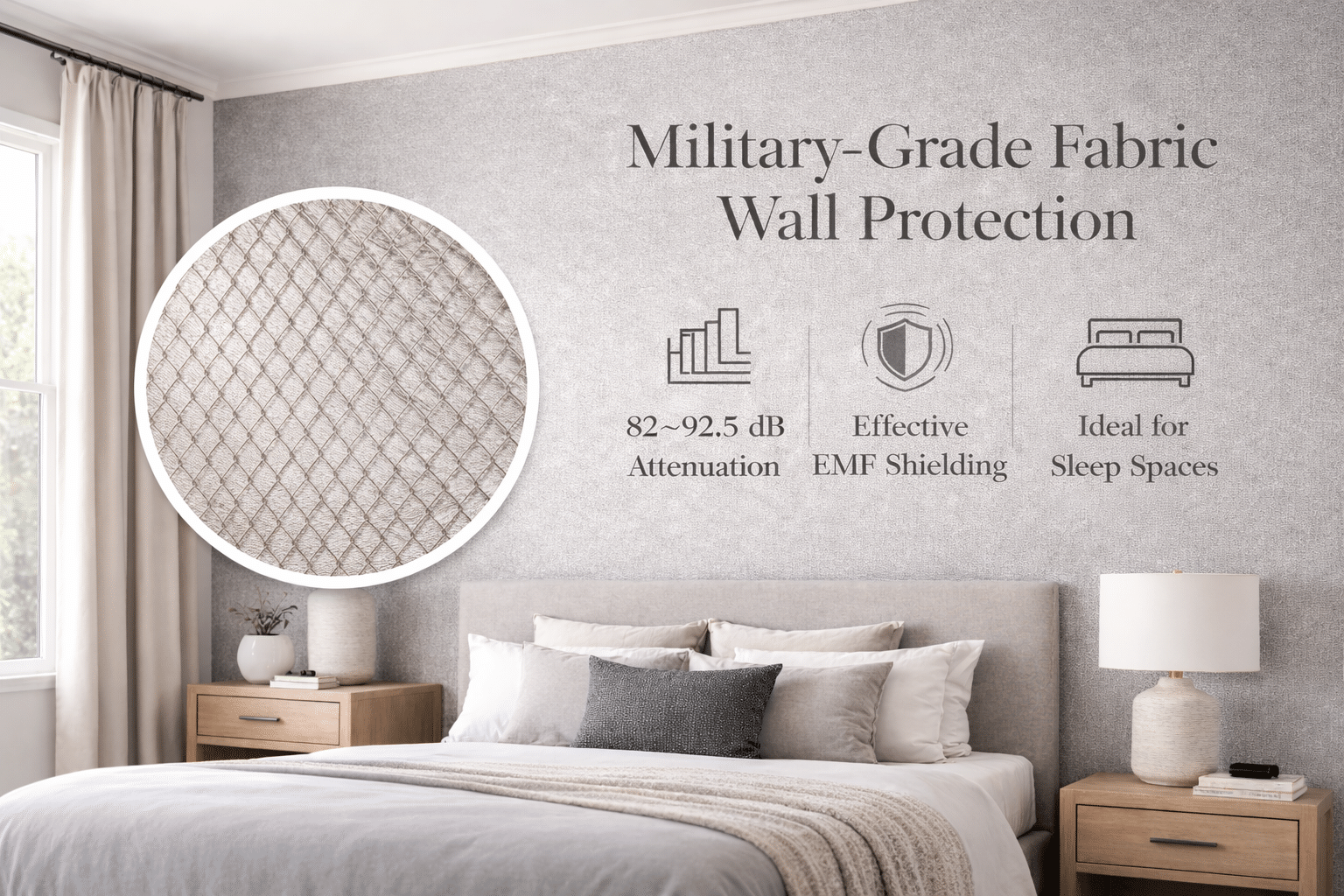
In some cases, targeted shielding materials may be used to help reduce the amount of radiofrequency (RF) energy entering interior spaces. For example, conductive fabrics or mesh materials can be applied within wall systems or on interior surfaces as part of a structured shielding approach.
It is important to recognize that shielding effectiveness depends on proper installation and overall building design. Incomplete or improperly implemented shielding may lead to inconsistent results. For this reason, working with a qualified professional—such as a building biologist—may be beneficial when considering more advanced solutions.
Address Window Exposure
Windows can be a point of RF entry due to their lack of conductive materials. Specialized window films or shielding curtains are sometimes used to help reduce signal penetration in these areas.
However, these materials may also reduce natural light transmission. As with any environmental modification, there are trade-offs between exposure reduction and overall comfort that should be considered.
Reduce Personal and Environmental Load
Smart meters are one of many sources of RF exposure in the modern home. Some individuals choose to focus on reducing cumulative exposure by limiting the use of wireless devices, optimizing router placement, or incorporating personal shielding accessories into their daily routine.
Wearable shielding garments are one option that may be used in certain situations, particularly for individuals seeking an added layer of precaution in higher-exposure environments.
Create a Lower-Exposure Sleep Environment
Because sleep is a prolonged and restorative period, many people choose to prioritize this area when making environmental adjustments. In higher-frequency environments, bed canopies or enclosed sleep systems may be used as part of a broader strategy to help reduce ambient exposure levels.
For multi-level homes, additional considerations—such as potential exposure from wiring or neighboring units—may also be relevant when designing a sleep setup.
While individual experiences vary, some users report improved comfort and a greater sense of ease when sleeping in a more controlled environment. These approaches are generally used as precautionary measures rather than medically established solutions. a Bed Canopy.
The Bottom Line
Smart meters represent a significant shift in how energy systems operate, bringing efficiency, automation, and real-time data into modern homes.
At the same time, they introduce a continuous source of radiofrequency exposure directly into residential environments, often without the ability for homeowners to control or remove the device. This has led to increasing concern among researchers, public health advocates, and affected individuals.
While current regulatory frameworks classify these devices as safe, those standards are based on limited assumptions about how electromagnetic exposure affects the body, primarily focusing on thermal effects. A growing body of research is examining potential non-thermal biological impacts, and the long-term implications remain unresolved.
Given the scale of deployment and the constant nature of exposure, this is not a minor or theoretical issue. For many, it raises legitimate questions about cumulative exposure inside the home—particularly in areas intended for rest and recovery.
In the absence of long-term certainty, some homeowners are choosing not to wait. Instead, they are taking measured, practical steps to reduce unnecessary exposure and create a more controlled living environment.
#SmartMeters #EMFAwareness #EMFProtection #RFExposure #RadiofrequencyRadiation #HomeSafety #HealthyHome #RadiationSafety #EMFTesting #BuildingBiology #ShieldingFabric #EMFShielding #FaradayProtection #ReduceExposure #WirelessRadiation #SmartHomeSafety #PrecautionaryPrinciple #DigitalHealth #EMFMitigation #RedemptionShield #SaferLiving #TechSafety #HomeWellness