Use Code: GIFT - Save 10%

Smart Homes and EMF: The Hidden High-Frequency Sources in Modern Houses
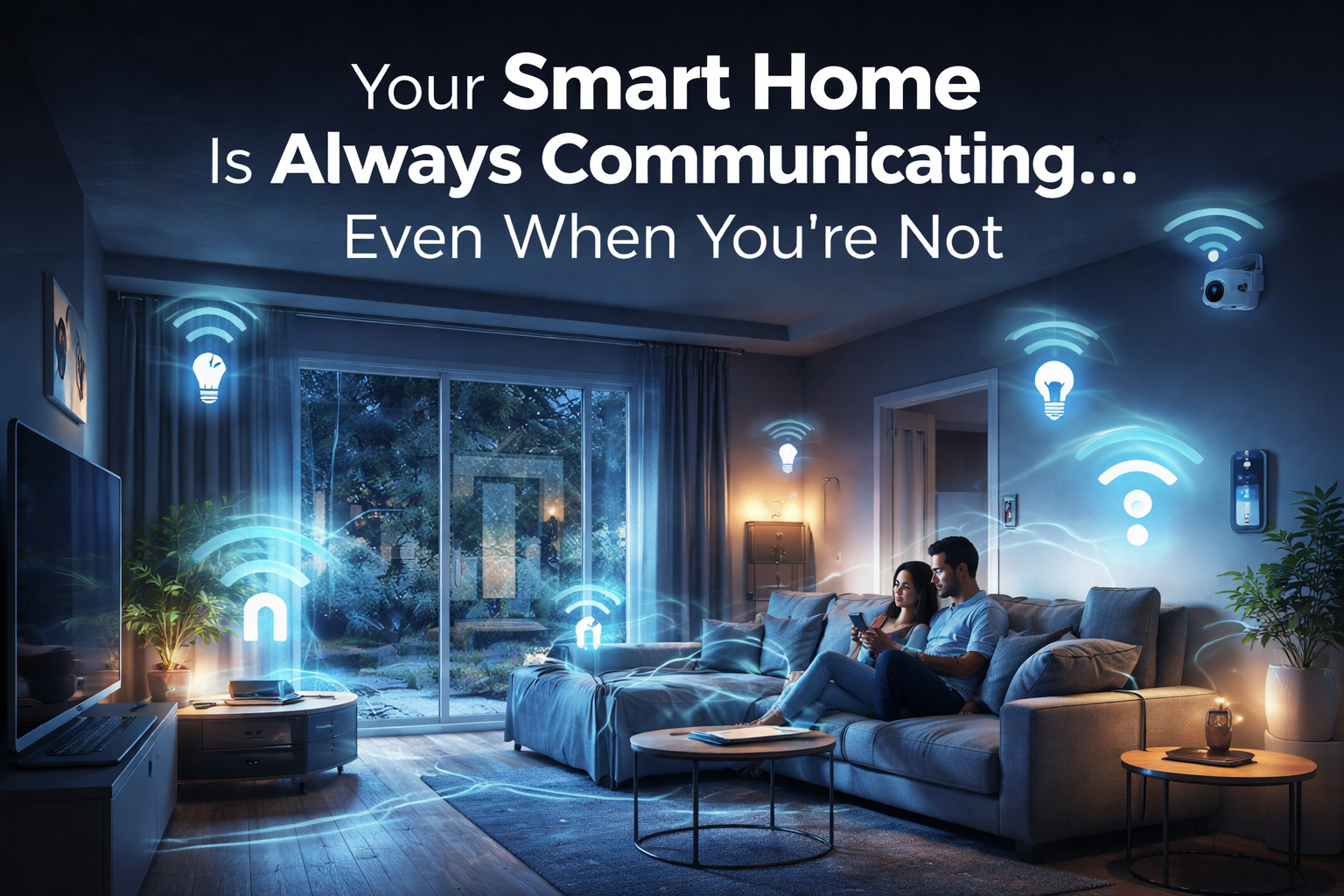
Smart homes promise convenience, automation, and futuristic living. With voice assistants, smart thermostats, connected lighting, and security systems, homeowners can control nearly everything with a simple command or smartphone tap.
But behind this convenience lies something many people rarely consider: a constantly connected environment filled with wireless signals.
From Wi-Fi routers to smart speakers, many modern household devices communicate through radiofrequency (RF) signals, a type of electromagnetic field (EMF) radiation used to transmit wireless data.
As smart technology spreads across homes worldwide, understanding how these devices interact with our environment has become increasingly important.
What Is a Smart Home?
A smart home is a residence equipped with internet-connected devices that allow automation, monitoring, and remote control.
Common smart home devices include:
- Wi-Fi routers and mesh systems
- Smart speakers
- Smart thermostats
- Smart TVs
- Smart lighting systems
- Security cameras and doorbells
- Smart appliances
- Voice assistants
- Wearable devices connected to the home network
- Doorbell Cameras
These devices stay connected through wireless technologies like Wi-Fi, Bluetooth, or cellular signals, which means they constantly transmit small amounts of radiofrequency energy.
To better understand the science behind wireless radiation, organizations like the National Institute of Environmental Health Sciences explain how these signals interact with biological systems.
Read more:
https://www.niehs.nih.gov/health/topics/agents/cellphones/index.cfm
The Hidden EMF Environment
A single wireless device may not seem like much. But modern homes often contain dozens of connected devices operating simultaneously.
These include:
- Smart TVs streaming content
- Phones connected to Wi-Fi
- Wearables syncing data
- Voice assistants waiting for commands
- Security cameras constantly uploading footage
According to research from the World Health Organization, radiofrequency electromagnetic fields are present anywhere wireless communication systems operate.
Learn more:
https://www.who.int/news-room/questions-and-answers/item/radiation-electromagnetic-fields
This layered wireless environment creates what some researchers call ambient RF exposure, where signals from multiple sources overlap throughout the home.
Wearable Devices Add Another Layer
Smartwatches and fitness trackers have added another dimension to wireless exposure.
Because these devices sit directly on the body, they communicate constantly using Bluetooth or Wi-Fi signals to transmit information like:
- Heart rate
- Sleep tracking
- Activity data
- GPS location
The CDC explains how wearable technology communicates using wireless signals, and why researchers continue studying long-term exposure patterns. The sad truth; many studies have already been conducted and the truth is in plain site.
Reference:
https://www.cdc.gov/radiation-health/data-research/facts-stats/wearable-technology.html
The Expansion of Wireless Infrastructure
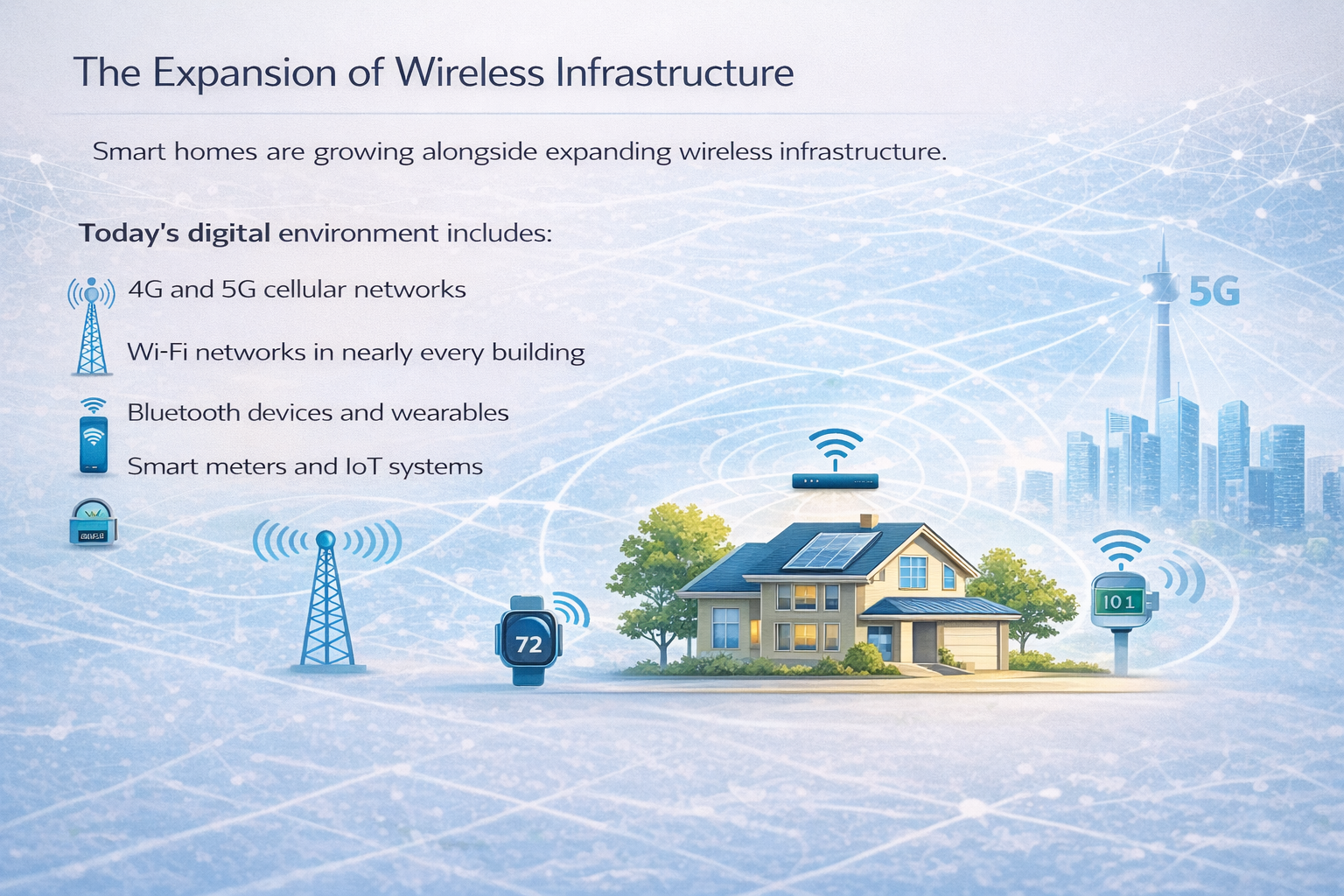
Smart homes are growing alongside expanding wireless infrastructure.
Today’s digital environment includes:
- 4G and 5G cellular networks
- Wi-Fi networks in nearly every building
- Bluetooth devices and wearables
- Smart meters and IoT systems
The National Toxicology Program has conducted research examining biological effects of long-term radiofrequency radiation exposure.
Read the study overview:
https://ntp.niehs.nih.gov/whatwestudy/topics/cellphones
While regulatory agencies state current exposure limits are considered safe, researchers continue studying long-term cumulative exposure as technology evolves.
Ways to Reduce EMF Exposure at Home
You don’t have to eliminate modern technology to create a healthier environment. Simple steps can help reduce unnecessary exposure.
Turn Off Wi-Fi at Night
Many routers allow scheduled shutdowns while you sleep.
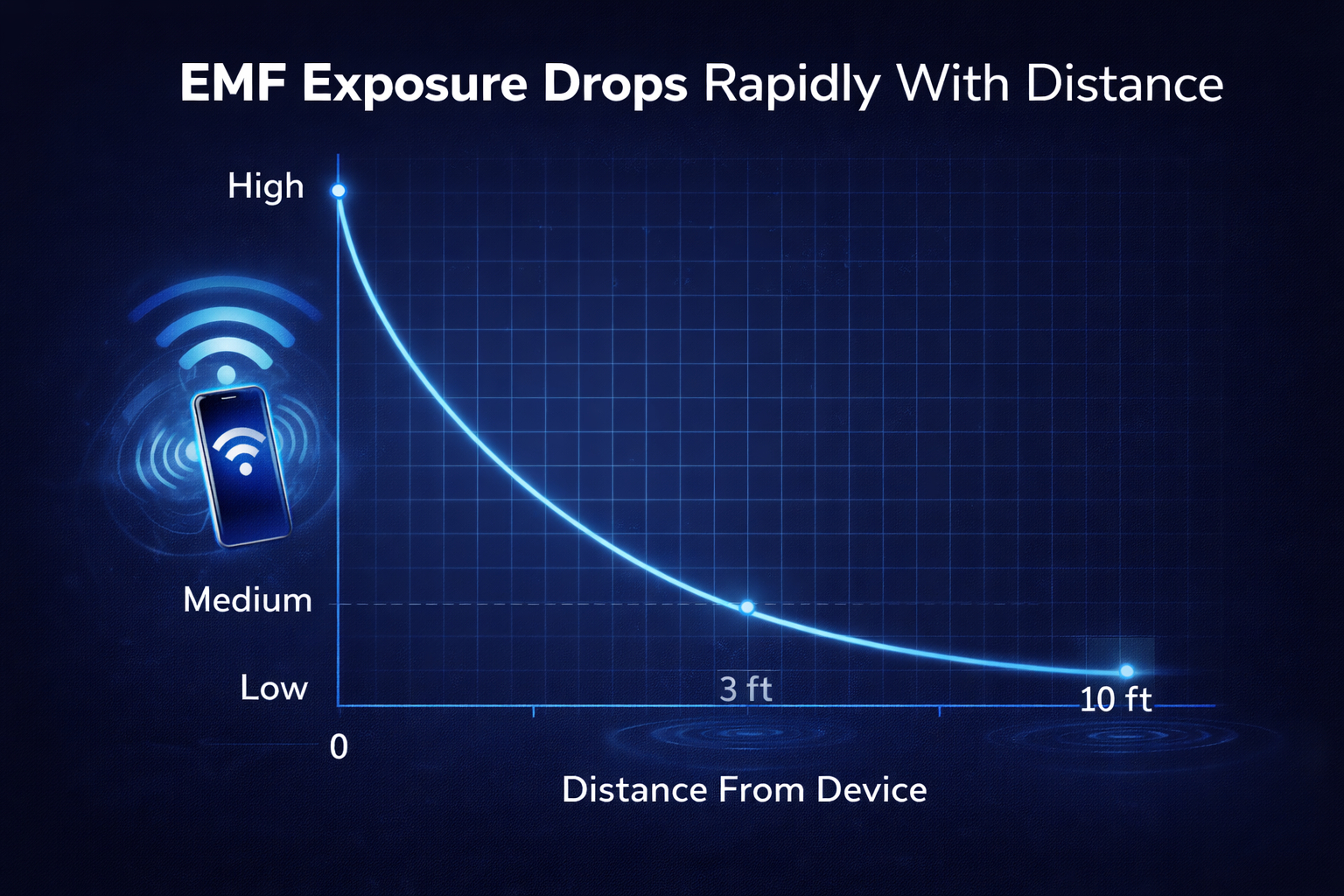
Increase Distance From Devices
Distance is one of the most effective ways to reduce RF exposure levels.
Use Wired Connections
Ethernet connections reduce wireless transmissions inside your home.
Limit Always-On Devices
Some smart assistants remain active 24/7.
Create a Low-Exposure Bedroom
Bedrooms are one of the most important places to reduce unnecessary wireless signals.
For those looking to reduce exposure further, explore our EMF Protection Accessories designed to support a lower-EMF home environment.
EMF Shielding Solutions
For individuals who want additional protection, shielding materials and signal-blocking tools can help reduce exposure in specific environments.
Some popular options include:
Faraday Fabric for EMF Shielding
Faraday Bags for Phones and Electronics
These tools can help block wireless signals from devices when they are not in use and add an extra layer of digital privacy protection.
Awareness Is the First Step
Smart homes offer incredible convenience, but like many technologies, they introduce environmental changes that people are only beginning to understand.
Wireless signals are invisible and silent, yet they are now a constant part of modern life.
Understanding where these signals come from allows families to make informed decisions about how technology fits into their homes.
Convenience and awareness can coexist.
The key is simply knowing what surrounds us in the digital age.
#SmartHomeEMF #EMFAwareness #WirelessRadiation #RFExposure #SmartHomeSafety #DigitalWellness #ConnectedHome #InternetOfThings #IoTDevices #HealthyHome #EMFProtection #LowEMFLiving #WirelessTechnology #ModernLiving #TechAndHealth #EnvironmentalHealth #ReduceExposure #PrecautionaryLiving #DigitalSafety #SmartTechnology #StayInformed #FutureOfHomes #TechSafety #RadiationAwareness #RedemptionShield